
Modern Skincare Trends in 2026: Ingredients, Routines & Beauty Innovations
Skincare is changing rapidly as consumers become more informed about ingredients, skin health, sustainability, and personalized beauty routines. Modern Skincare Trends are increasingly moving away from complicated routines and toward practical, consistent, and skin-focused approaches. At the same time, social media continues to introduce new products and techniques to a large audience, making it important to distinguish useful skincare practices from short-lived viral trends.
What Are Modern Skincare Trends?
Modern Skincare Trends refer to the changing products, ingredients, routines, technologies, and consumer preferences shaping the beauty industry. Today’s skincare audience is increasingly interested in understanding what products contain, how they fit into a routine, and whether their benefits are supported by credible evidence.
Instead of following every viral recommendation, consumers can focus on basic skincare principles such as cleansing, moisturizing, and protecting the skin from sun exposure. The American Academy of Dermatology also emphasizes that skincare routines should be appropriate for an individual’s skin needs and that introducing products gradually can help identify irritation.
1. Skin-Barrier-Focused Skincare
One of the important Modern Skincare Trends is greater attention to the skin barrier. The skin barrier helps maintain hydration and protects the skin from external irritants.
Many consumers are therefore choosing gentle cleansers, moisturizers, and products designed to support comfortable, hydrated skin rather than constantly adding strong active ingredients.
A simple routine can often be easier to maintain than a complicated routine containing many products.
2. Personalized Skincare Routines
Another growing direction in Modern Skincare Trends is personalization. Instead of choosing products simply because they are popular online, consumers are increasingly considering their skin type, concerns, lifestyle, and individual tolerance.
A personalized routine might focus on hydration, uneven-looking skin tone, acne-prone skin, dryness, or signs of aging depending on the individual’s needs.
The goal is not necessarily to use more products. The goal is to select products that have a clear purpose within the routine.
3. Interest in Skincare Ingredients
Consumers are becoming more interested in individual skincare ingredients. Ingredients such as vitamin C, hyaluronic acid, ceramides, niacinamide, and retinoids are frequently discussed in beauty content.
However, an ingredient should not automatically be considered suitable for everyone simply because it is trending. Product concentration, formulation, skin type, frequency of use, and individual sensitivity can all matter.
When introducing a new skincare product, adding one product at a time can make it easier to determine whether the skin tolerates it.
4. The Growth of Minimalist Skincare
Minimalist skincare is another significant part of Modern Skincare Trends. Instead of maintaining a long routine with numerous products, many people are choosing a smaller number of products that perform specific functions.
A basic routine may include:
- A gentle cleanser
- A moisturizer
- Sun protection
- Targeted products based on individual needs
Keeping a routine simple can also make it easier to remain consistent.
5. Sunscreen and Everyday Skin Protection
Sun protection remains an important part of modern skincare. The American Academy of Dermatology recommends broad-spectrum, water-resistant sunscreen with SPF 30 or higher as part of sun-protection practices.
Social media can sometimes promote skincare routines without adequately discussing sun protection. For a long-term skincare routine, protecting skin from excessive ultraviolet exposure is an important consideration.
6. Social Media and Viral Skincare Trends
Social media has become a major force behind Modern Skincare Trends. TikTok, Instagram, YouTube, and other platforms can quickly turn a product, ingredient, or skincare technique into a viral trend.
However, popularity does not necessarily mean that a skincare practice is appropriate for everyone. The American Academy of Dermatology has specifically cautioned that some social-media skincare trends can cause irritation or other problems when used incorrectly.
Consumers should therefore look beyond viral videos and consider credible dermatology information when evaluating new skincare practices.
7. Beauty Technology and AI
Technology is also influencing Modern Skincare Trends. Beauty brands are increasingly exploring digital skin analysis, artificial intelligence, personalized product recommendations, virtual consultations, and technology-assisted beauty experiences.
These technologies can make product discovery more personalized, but digital recommendations should not automatically be treated as medical advice. People with persistent, severe, or unusual skin problems may need professional evaluation.
8. Sustainable Beauty
Sustainability is another important area within Modern Skincare Trends. Consumers are increasingly interested in packaging, ingredient sourcing, refillable products, product longevity, and reducing unnecessary waste.
Sustainable skincare can involve making thoughtful purchasing decisions rather than simply buying more products because they are marketed as environmentally friendly.
9. Evidence-Based Skincare Over Viral Hype
The biggest lesson from today’s skincare landscape is that Modern Skincare Trends should be evaluated carefully.
A product becoming popular online does not automatically establish that it will produce the same results for every person. Dermatologists have warned that some social-media skincare trends may lack sufficient evidence or may be unsuitable for particular skin types.
A better approach is to ask:
- What is the purpose of this product?
- Is there credible evidence supporting its claimed benefit?
- Is it appropriate for my skin type?
- Could it cause irritation?
- Am I already using similar active ingredients?
- Do I need professional advice?
10. The Future of Modern Skincare
The future of Modern Skincare Trends is likely to combine personalization, technology, ingredient awareness, sustainability, and a stronger focus on healthy skin rather than simply chasing viral beauty aesthetics.
Consumers are becoming more interested in understanding their skin and creating routines that are practical and sustainable. This shift can help move skincare conversations from short-term trends toward informed and consistent habits.
Conclusion
Modern Skincare Trends are evolving from complicated beauty routines toward personalization, skin-barrier awareness, ingredient education, everyday sun protection, technology, and sustainable choices.
The most useful skincare routine is not necessarily the one with the most products. It is one that fits an individual’s needs, can be followed consistently, and is based on reliable information. Before adopting a viral skincare trend, consumers should research the evidence and consider their own skin type and sensitivity.
For ongoing or significant skin concerns, consulting a qualified dermatologist can provide personalized guidance that social-media trends cannot replace.
Media in Marketing plays an important role in helping businesses communicate with their target audience, build brand awareness, generate leads, and support long-term growth. From traditional advertising channels to social media, search engines, websites, email, and video platforms, businesses have many ways to connect with potential customers.
A successful marketing strategy is not simply about using as many channels as possible. It is about selecting the right media based on the target audience, business objectives, budget, and type of content.
What Is Media in Marketing?
Media in Marketing refers to the different communication channels businesses use to promote their products, services, ideas, and brands to a target audience.
Marketing media can include digital channels such as websites, search engines, social media, email, online advertising, and video platforms. It can also include traditional channels such as television, radio, newspapers, magazines, billboards, and other forms of offline advertising.
The right combination of media can help a business communicate its message at different stages of the customer journey.
Why Is Media in Marketing Important?
Media in Marketing is important because customers interact with brands through multiple channels. A potential customer may discover a brand through a search engine, visit its website, see its social media content, read reviews, and eventually make a purchase.
An effective media strategy can help businesses:
- Increase brand awareness
- Reach specific audiences
- Generate website traffic
- Build customer engagement
- Generate leads
- Support sales
- Strengthen brand credibility
- Measure marketing performance
Instead of focusing only on promotion, businesses can use different media channels to provide useful information and create meaningful customer interactions.
Types of Media in Marketing
There are several major types of Media in Marketing, and each has a different role.
1. Owned Media
Owned media refers to channels that a business controls. Examples include:
- Business websites
- Blogs
- Email newsletters
- Mobile applications
- Brand social media profiles
Owned media gives businesses greater control over their content, messaging, and customer experience.
2. Paid Media
Paid media involves paying to reach an audience. Examples include:
- Search advertising
- Social media advertising
- Display advertising
- Sponsored content
- Video advertising
- Traditional advertising
Paid media can help businesses reach specific audiences and generate traffic more quickly, although performance depends on targeting, creative quality, budget, and campaign optimization.
3. Earned Media
Earned media refers to exposure a business receives without directly paying for the placement. Examples include:
- Customer reviews
- Online mentions
- Media coverage
- Organic social sharing
- Word-of-mouth recommendations
Earned media can contribute to brand visibility and credibility because the exposure comes from customers, publishers, or other independent sources.
Digital Media in Marketing
Digital channels have transformed the way businesses communicate with consumers. Media in Marketing now includes a wide range of online platforms that allow businesses to reach audiences based on interests, behavior, search activity, demographics, and other signals.
Important digital marketing channels include:
Search Engine Marketing
Search engines can help businesses reach people who are actively searching for information, products, or services. SEO focuses on improving organic visibility, while paid search advertising can provide sponsored visibility.
Social Media Marketing
Social media allows businesses to publish content, communicate with customers, build communities, and promote products or services.
Platforms may include Instagram, Facebook, LinkedIn, YouTube, TikTok, and other networks depending on the target audience.
Content Marketing
Content marketing focuses on creating useful and relevant content for a specific audience. Blog articles, videos, guides, infographics, case studies, and newsletters can all form part of a content strategy.
Email Marketing
Email marketing allows businesses to communicate directly with subscribers. It can be used for newsletters, educational content, product updates, offers, and customer retention campaigns.
How to Create a Media Marketing Strategy
A strong Media in Marketing strategy begins with clear objectives.
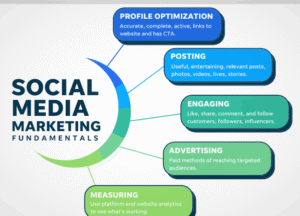
Step 1: Define Your Marketing Goal
First, determine what the campaign needs to achieve. Common objectives include awareness, website traffic, lead generation, sales, or customer retention.
Step 2: Understand Your Target Audience
Research your audience’s needs, interests, challenges, online behavior, and purchasing journey. This information can help determine which channels are most relevant.
Step 3: Select the Right Media Channels
Do not choose channels simply because they are popular. Select platforms that match your audience and business objectives.
For example, a B2B company may prioritize LinkedIn, search, email, and educational content, while a visually focused consumer brand may use platforms such as Instagram, YouTube, or TikTok.
Step 4: Create Useful Content
Content should provide value rather than simply promoting a product. Educational articles, tutorials, demonstrations, customer stories, and practical guides can help audiences understand a brand’s offering.
Step 5: Measure Performance
Use relevant metrics to evaluate results. Depending on the campaign, these may include:
- Impressions
- Reach
- Engagement
- Website traffic
- Click-through rate
- Leads
- Conversion rate
- Return on advertising spend
Measurement allows marketers to identify what is working and where improvements may be needed.
Media Planning and Marketing
Media planning is an important part of Media in Marketing because it helps businesses decide where, when, and how to distribute their marketing messages.
A media plan may consider:
- Target audience
- Campaign objectives
- Marketing budget
- Channel selection
- Content formats
- Campaign duration
- Expected results
- Performance measurement
A well-structured media plan can help businesses use their marketing resources more efficiently.
The Role of Social Media
Social media has become an important part of modern Media in Marketing because it allows businesses to communicate directly with audiences.
Businesses can use social platforms to:
- Share educational content
- Demonstrate products
- Answer customer questions
- Build communities
- Promote campaigns
- Collect audience feedback
- Increase brand visibility
However, businesses should select social platforms based on their audience and objectives rather than trying to maintain an active presence everywhere.
Common Media Marketing Mistakes
Businesses can reduce marketing effectiveness by making avoidable mistakes.
Common problems include:
- Targeting an unclear audience
- Using too many channels without a strategy
- Creating content without a clear purpose
- Focusing only on promotional messages
- Ignoring performance data
- Failing to maintain consistent branding
- Following trends without considering audience relevance
A focused strategy is generally easier to measure and optimize than an unfocused approach.
Future Trends in Media in Marketing
The future of Media in Marketing is increasingly connected with artificial intelligence, automation, personalization, video content, creator marketing, and data-driven decision-making.
AI tools can help marketers with tasks such as content ideation, audience research, campaign analysis, and workflow automation. However, human judgment remains important for strategy, creativity, brand positioning, accuracy, and customer understanding.
Personalization is also becoming increasingly important as businesses seek to provide more relevant experiences to their audiences.
Conclusion
Media in Marketing provides businesses with multiple ways to communicate with audiences, build awareness, generate leads, and support business growth. Owned, paid, and earned media each have different roles, while digital channels such as SEO, social media, content marketing, email, and online advertising provide opportunities for targeted communication.
The key is not simply to use more media channels. Businesses should choose channels based on their audience, objectives, resources, and measurable outcomes. By combining useful content with thoughtful media planning and continuous performance analysis, businesses can build a more effective and sustainable marketing strategy.
Focus Keyword: Media in Marketing
Suggested SEO Keywords:
Media in Marketing, Media Marketing Strategy, Types of Media in Marketing, Digital Media in Marketing, Media Planning, Marketing Channels, Social Media Marketing, Paid Media, Owned Media, Earned
Media in Marketing is an essential part of modern business communication, helping brands connect with their target audience through the right channels and content. From social media and search engines to websites, email marketing, video platforms, and traditional advertising, Media in Marketing provides businesses with multiple opportunities to increase brand awareness, engage customers, generate leads, and support sales. A successful Media in Marketing strategy focuses on understanding the audience, selecting relevant channels, creating valuable content, and measuring campaign performance. By combining the right media channels with clear marketing goals, businesses can build stronger customer relationships and create sustainable digital growth.
In today’s competitive digital environment, Media in Marketing helps businesses communicate their brand message across multiple customer touchpoints. Companies can use social media, search engines, websites, email campaigns, online advertising, video content, and other channels to reach people at different stages of the buying journey. Effective Media in Marketing is not about being present on every platform; it is about choosing channels that match the audience, business goals, and type of content. By creating relevant content and monitoring key performance metrics, marketers can improve audience engagement, strengthen brand visibility, and make better-informed marketing.